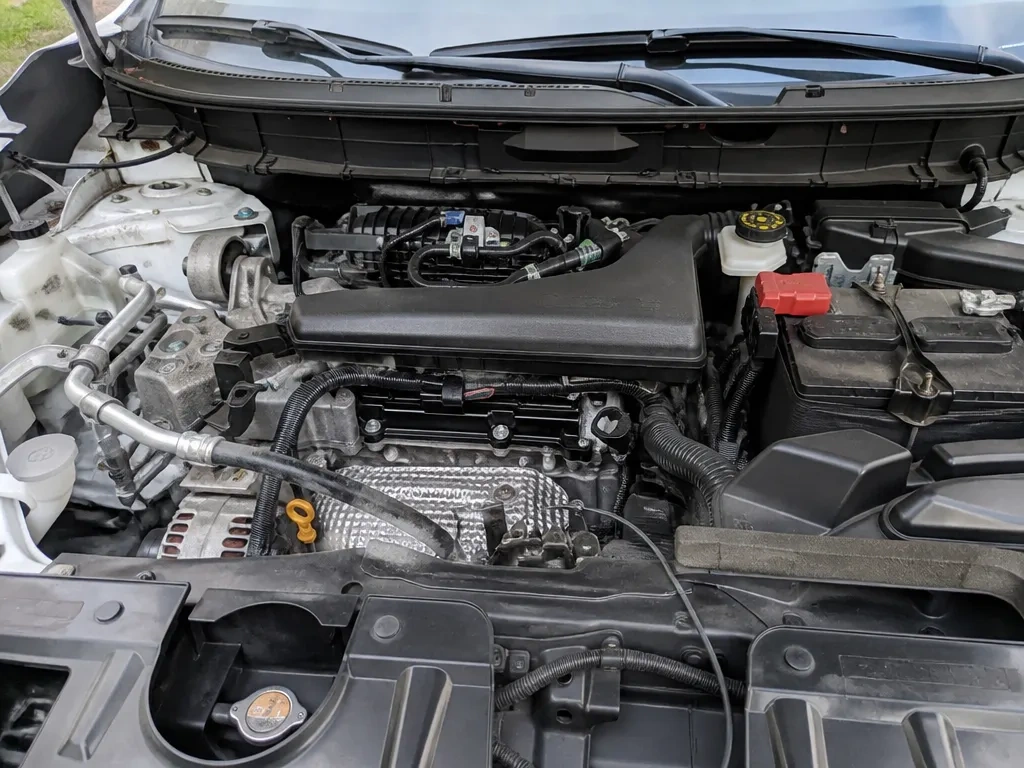
For a 2017 Nissan Rogue 2.5L 4-cylinder oil change with the oil filter replaced, use 4.5 quarts (about 4.3 liters) as the stated fill target. Verify the final level with the dipstick rather than relying on volume alone.
“With filter” means the target includes the oil needed when a new filter is installed. Drain the old oil, fit the replacement filter, add oil gradually, and check the dipstick on level ground after the oil has settled.
What Is The Oil Capacity For A 2017 Rogue 2.5l With Filter?
For the 2017 Nissan Rogue with the 2.5L 4-cylinder engine, the stated oil-change target with a replacement filter is 4.5 quarts (about 4.3 liters).
Use that figure as a refill target, not as a guarantee of the final dipstick reading. The dipstick check accounts for oil that remains after draining, the time allowed for the oil to settle, and the actual service conditions.
Exact Capacity Value In Quarts And Liters
The stated with-filter figure is 4.5 qt, or approximately 4.3 L. Confirm the specification and final level for the vehicle before treating the figure as a precise fill instruction.
| Service condition | Oil capacity target | Metric equivalent |
|---|---|---|
| Oil change with oil filter replaced (“with filter”) | 4.5 quarts | about 4.3 liters |
What The “With Filter” Condition Includes
“With filter” identifies an oil change in which the old filter is removed and a new oil filter is installed. The stated total fill target is intended for that service condition, including the oil associated with the replacement filter.
If the filter is not replaced, do not automatically use the with-filter figure as the amount to pour. The correct final level still depends on the oil left in the engine and the dipstick reading.

How Is The With-filter Capacity Defined For This Engine?
The with-filter capacity is the stated total fill target for an oil change that includes draining the old oil and replacing the filter. For the 2017 Rogue 2.5L 4-cylinder, that stated target is 4.5 quarts (about 4.3 liters).
“With filter” tells you which service condition the number describes. “Without filter” refers to a different procedure in which the filter is not replaced. If the applicable without-filter figure is needed, verify it in the vehicle’s service documentation rather than converting the with-filter number yourself.
What Variables Can Change The Capacity And By How Much?
The stated capacity is a target. The amount needed to reach the correct dipstick mark can vary with the amount of oil that drains, the filter used, and the conditions during the check. Use the dipstick as the final confirmation.
When the reading is different from what you expect, check the procedure before adding a large amount. Confirm that the vehicle is level, the dipstick was read correctly, the filter was installed properly, and the oil had time to settle.
What Steps Should You Follow To Reach The Target Fill?
Use the 4.5-quart, approximately 4.3-liter figure as a starting target when the filter is replaced. Add part of the oil first, then use the dipstick to finish the fill without overshooting.
If the dipstick reads high, do not assume the level will correct itself. Remove a small amount using a controlled method, then repeat the check.
How To Verify The Fill Using The Dipstick?
The dipstick is the final check after the oil has settled. The capacity figure is a volume target, while the dipstick shows the level actually present in the engine under the conditions of the check.
Use the same checking method each time. A partially inserted or dirty dipstick can make the level difficult to read, and checking before the oil settles can lead to an unnecessary adjustment.
What If The Dipstick Shows Low Or High After Checking?
Correct an incorrect reading gradually. Add or remove a small amount, allow the oil to settle, and repeat the dipstick check before making another adjustment.
What Safety And Quality Cautions Matter For This Check?
Accuracy depends on a consistent level check. Safety also matters during draining and filter removal, especially when the engine or oil is hot.
Check on level ground and keep the vehicle steady while the oil settles. A slope can affect the reading and lead to an incorrect adjustment.
Allow the oil to drain and settle before taking the final reading. Checking too soon can make the level appear different from its settled position.
Handle hot components carefully during the service. Use suitable protection, keep hot oil away from your skin, and install the filter securely without overtightening it.
| Quality step | What can go wrong | Fix |
|---|---|---|
| Level check on a slope | Dipstick misread, incorrect adjustment | Recheck on level ground |
| Checking before settling | Unnecessary oil addition | Allow the oil to settle and recheck |
| Wrong filter or gasket left behind | Oil leak or installation problem | Verify the filter and mounting surface |
After any adjustment, recheck the level after the oil has settled. Do not rely only on the amount poured in.
With Filter Vs Without Filter Capacity And Why It Matters
The with-filter figure applies when the oil filter is replaced during the oil change. For the 2017 Rogue 2.5L 4-cylinder, the stated with-filter target is 4.5 quarts (about 4.3 liters).
| Scenario | Capacity target | What that number is counting |
|---|---|---|
| With filter (filter replaced) | 4.5 qt (about 4.3 L) | The stated fill target for an oil change that includes a replacement filter |
| Without filter (filter not replaced) | Verify separately | A different service condition that should not automatically use the with-filter figure |
If you replace the filter, plan around the with-filter target, then use the dipstick to confirm the final level. If the filter is not replaced, verify the applicable without-filter figure in the vehicle’s service documentation.
If you need a numeric without-filter figure for recordkeeping, verify it against the documentation for the vehicle and the exact service procedure.
Quick Summary
For a 2017 Nissan Rogue with the 2.5L 4-cylinder engine, the stated oil-change target when the oil filter is replaced is 4.5 quarts (about 4.3 liters).
Use that figure as a target, then confirm the result because the final dipstick reading depends on:
Next action: After installing the filter and adding oil, allow it to settle, check the dipstick, and adjust in small increments until the level is within the marked range.
Frequently Asked Questions
How Much Oil And How Many Quarts Should I Buy For The Job?
Use the stated with-filter target of 4.5 quarts, about 4.3 liters, as your planning figure. Have enough oil available to reach that target while leaving room to add gradually after checking the dipstick.
Do not treat the full stated capacity as an instruction to pour everything in without checking. The final amount can depend on how thoroughly the old oil drained and where the dipstick reads after settling.
How Long Should The Whole Oil Change Take If I’m Doing It At Home?
The time depends on the equipment, the drain, the filter change, and the time allowed for the oil to settle. Do not rush the drain or the final dipstick check simply to finish sooner.
If you check immediately after adding oil, the reading may not represent the settled level. Allow the oil to settle, then complete the check before driving.
What Happens If I Drive Without Rechecking The Dipstick After An Oil Change?
You will not know whether the final level is within the dipstick’s marked range. A low or high reading should be corrected before normal driving rather than ignored.
After replacing the filter and adding oil, check the dipstick on level ground once the oil has settled. If the level is outside the proper range, correct it before continuing.
When Should I Stop And Take The Rogue To A Professional?
Get help if you cannot obtain a consistent dipstick reading, cannot identify the correct filter, or suspect a problem with the drain plug, filter, gasket, or oil leak.
If the dipstick remains far from the expected range after careful, small corrections, have the procedure and installation inspected rather than continuing to add or remove large amounts of oil.
How Can I Verify A Shop’s Oil Capacity Claim For A “With Filter” Oil Change?
Ask whether the filter was replaced and whether the shop used the with-filter service condition. The stated target for this article is 4.5 quarts (about 4.3 liters), but the final level should still be confirmed with the dipstick.
If the shop used a without-filter figure or skipped the final level check, ask which specification and procedure it followed. Verify any disputed figure against the vehicle’s service documentation.
Does The Correct Capacity Change If I Use A Different Oil Viscosity, Or If The Engine Is Warmer Or Cooler?
The stated with-filter target remains the reference for the service condition, but temperature and oil flow can affect draining and the timing of the dipstick reading. Do not choose a different capacity by guesswork.
Use the specified oil, allow the oil to settle, and confirm the final level on the dipstick after the filter replacement.