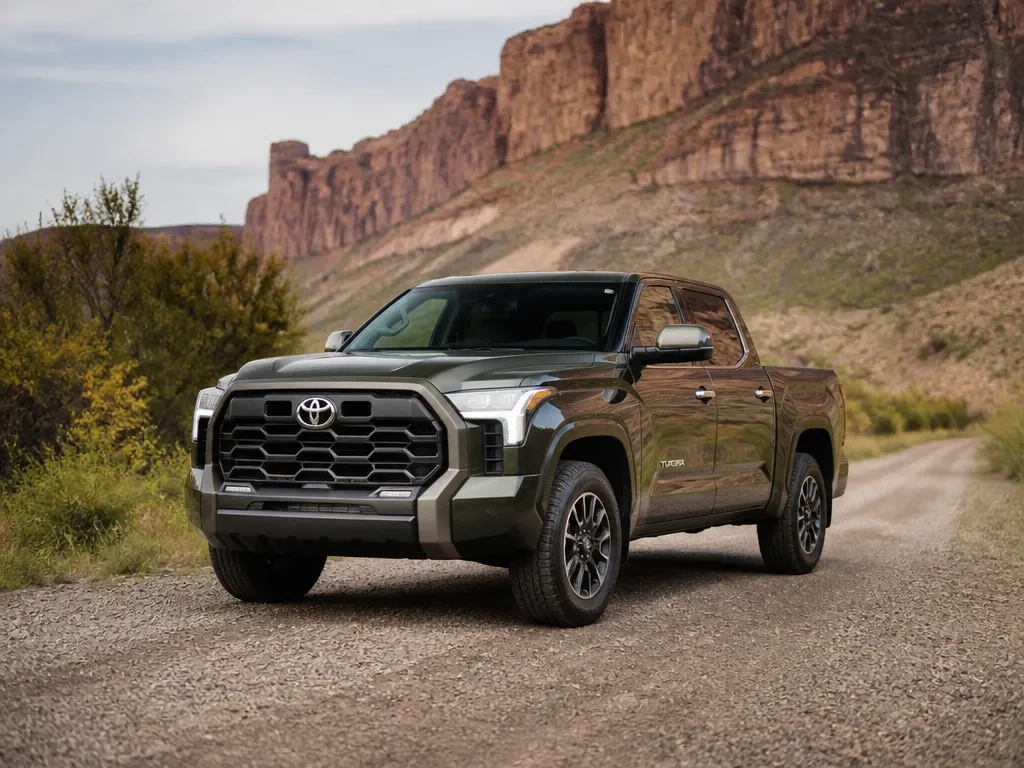
For the 2023 Toyota Tundra 3.4L V6, this guide uses 7.9 quarts (7.5 liters) as the stated fill quantity with a new oil filter. Treat that figure as a starting point for a complete drain and filter replacement, then confirm the final level on the dipstick with the engine off and the vehicle level. Verify the quantity in the owner’s manual for the specific truck before servicing it.
The stated dry-fill figure is 6.8 quarts (6.4 liters). For a normal oil and filter service, the “with filter” figure is the relevant starting point. The dipstick remains the final check because the amount drained can vary.
What Is The Exact Oil Capacity With Filter For The 2023 Tundra 3.4l V6 (Quarts And Liters)?
This guide uses 7.9 quarts (7.5 liters) for a 2023 Toyota Tundra 3.4L V6 oil change with a new oil filter. Use it as the initial target for a complete drain and filter replacement, then verify the dipstick reading with the engine off and the vehicle level. Confirm the figure against the owner’s manual for the exact vehicle.
The dry-fill figure stated here is 6.4 liters, or 6.8 quarts, for the engine-only condition without the filter quantity counted. That is not the normal target for an oil and filter service.
When this stated number applies:
No separate 2WD and 4WD figures are stated in the information used for this guide. Do not assume that applies to every configuration. Confirm the correct specification for the vehicle identification number, engine version, and replacement filter. For the configuration described here, the starting target remains 7.9 qt (7.5 L), followed by a dipstick check.

Why Does The Oil Capacity Reflect More Than Just The Pan Size?
Oil capacity is not necessarily the same as oil-pan volume. Oil can remain in the filter, housing, pump, passages, and other parts of the lubrication system. The amount that must be added after draining also depends on how completely the system emptied.
For service purposes, the stated capacity is intended to bring the oil level to the proper dipstick range after the filter is replaced and oil has circulated. Some oil may remain on internal surfaces or in passages after draining. A new filter can also contain oil once the engine is running.
That is why the stated with-filter capacity should be treated as an initial fill target, not a substitute for checking the dipstick. Install the correct filter, refill carefully, allow the oil to settle, and confirm the level with the engine off and the vehicle level.
Which Factors Change The Capacity In Practice And By How Much (Drive Type, Engine Revision, Filter Type)?
The stated 7.9 quarts (7.5 liters) applies to the configuration described above. The correct figure can depend on the vehicle configuration, engine version, market, service condition, and filter application. When any of those details are uncertain, use the owner’s manual or Toyota service information for the specific vehicle.
How Should You Apply These Numbers When Planning A Fill And Service?
Use the with-filter figure only for a complete drain and filter replacement. Treat the dipstick reading as the final check, using level ground and the checking conditions specified for the vehicle.
What Are The Potential Failure Modes, Costs, Or Risks Of Misapplying The Capacity?
The oil level should be corrected before driving if it is clearly outside the marked range. The information used here does not support specific failure rates or repair costs, so the table describes possible outcomes rather than guaranteed results.
| Misapplication | What you may see | Main concern | Repair impact |
|---|---|---|---|
| Overfill beyond the full range | An incorrect dipstick reading or other operating symptoms | The engine may not be operating at its intended oil level | Oil may need to be removed and the level checked again |
| Underfill | A low oil level indication or an abnormal reading | Insufficient oil can create a risk of lubrication problems | Correct the level promptly and investigate any warning or unusual noise |
| Using the wrong full quantity | The level remains outside the intended dipstick range | The service condition may not match the installed filter and vehicle | Recheck the application, correct the level, and seek help if it remains abnormal |
The practical rule is straightforward: use the applicable service quantity, then confirm the level on the dipstick before driving. If the reading is clearly high or low, correct it rather than relying on the amount poured. Persistent warnings, leaks, or unusual engine noise require further inspection.
Warranty And Repair Cost Implications
The information used here does not establish warranty coverage or repair costs. A claim may depend on the cause of the damage, the vehicle’s warranty terms, and the documentation available. If an incorrect oil level is discovered, correct it promptly and keep a record of the service.
What Edge Cases Could Mislead You In Real-world Scenarios?
The stated 7.9 quarts (7.5 liters) assumes the vehicle, engine, service condition, and filter match the application described here. Any uncertainty about those details should be resolved before filling.
Market-specific Parts Or Specs
Filter applications and service information can vary by market or vehicle configuration. Confirm the filter part number and oil specification for the vehicle identification number before servicing an imported or otherwise nonstandard truck.
Aftermarket Filters With Different Volumes
An aftermarket filter should match the required application. If the part number or cross-reference is unclear, use the vehicle-specific documentation or an OEM-equivalent part, then set the final level by the dipstick.
Extreme Temperatures And High-mileage Engines
Oil may take longer to drain or return to the sump under some conditions. Follow the specified checking procedure and use the same conditions for repeat readings. Do not add oil solely because of a temporary reading.
Used Or Rebuilt Engines With Unknown Oil History
If the engine’s history or configuration is unknown, verify the engine and filter application before using the stated fill target. After service, check the level carefully and investigate any persistent abnormal reading, warning, leak, or noise.
| Edge case | What can go wrong | Practical move |
|---|---|---|
| Wrong filter for the vehicle identification number | The stated service quantity may not apply | Verify the filter part number before filling |
| Aftermarket filter substitution | The application or service assumptions may differ | Use a confirmed equivalent and set the level by dipstick |
| Cold or hot check timing | The reading may not reflect the intended checking condition | Follow the manual’s settling and temperature guidance |
| Unknown or rebuilt engine | The engine specification may not match the truck’s original configuration | Verify the engine and filter requirements before servicing |
How Do You Perform A Complete Oil-change On The 3.4l V6, Including Torque Specs?
This procedure is for the 2023 Tundra 3.4L V6 configuration described here. It uses 7.9 quarts (7.5 liters) as the initial fill target with a new oil filter. Verify the oil specification and all torque requirements in the applicable Toyota service information before beginning.
Torque-spec note: Numeric drain plug and oil filter torque values are not provided here. Use the owner’s manual or Toyota service information for the exact engine, filter, fastener, and installation method. Do not substitute a guessed value.
Maintenance Intervals, Quick-reference Tools, And Official Sources For Validation
Confirm the maintenance schedule in the owner’s manual for the vehicle’s trim, market, drivetrain, and use. The specific interval figures below should not be treated as verified without that check.
The interval figures stated in the supplied article are every 5,000 miles (8,000 km) or 6 months for normal driving, and every 3,000 miles (4,800 km) or 3 to 4 months for severe use. Verify whether those intervals apply to the exact vehicle before relying on them. Severe-use examples may include frequent short trips, extended idling, towing, dusty roads, or extreme temperatures.
| Driving pattern | Interval stated here | What to verify |
|---|---|---|
| Mostly highway, steady temperatures | 5,000 mi (8,000 km) or 6 months | Whether the normal-use schedule applies |
| Mixed city driving | 5,000 mi (8,000 km) or 6 months | Whether the vehicle classifies this use as normal or severe |
| Severe duty | 3,000 mi (4,800 km) or 3 to 4 months | The manufacturer’s definition and required interval |
For the next service, confirm the filter and oil specification, park on level ground, drain the oil, install the filter, tighten the service hardware to the applicable specification, add the confirmed amount, and check the dipstick after the oil has settled.
For validation, consult the Owner’s Manual scheduled-maintenance section, the engine-oil and filter requirements, and the Toyota parts information for the exact 3.4L V6 configuration. Use the applicable service information for torque values. If the documentation differs from the figures in this guide, follow the vehicle-specific documentation.
Quick Summary
For the 2023 Toyota Tundra 3.4L V6 configuration described here, the stated fill quantity with a new oil filter is 7.9 quarts (7.5 liters). Confirm that figure for the exact vehicle before service.
The dry-fill figure stated here is 6.8 quarts (6.4 liters). It is not the normal target for a complete oil and filter change. A partial drain, different filter application, engine revision, market specification, or drivetrain configuration may require different service information.
The safe procedure is to use the confirmed with-filter quantity as the initial fill, then check the dipstick with the engine off and the vehicle level. Add or remove oil as needed to reach the specified range.
| Scenario | Starting target |
|---|---|
| Complete drain and new filter | 7.9 qt (7.5 L), subject to vehicle-specific confirmation |
Next action: Verify the quantity, oil specification, filter, and checking procedure for the truck. Then refill carefully and set the final level on the dipstick.
Frequently Asked Questions
What Will An Oil Change For The 2023 Tundra 3.4l V6 Cost, And What Should I Expect To Pay For Parts And Labor?
No reliable price is provided here. Cost depends on location, oil and filter choice, labor, disposal, and any additional service. Ask a local shop for an itemized quote after it confirms the vehicle and filter application.
For comparison, price the correct oil and filter separately and ask whether the quote includes labor, disposal, supplies, and the final level check.
How Soon After Driving A Long Distance Or Towing Should I Check The Oil Level, And What If The Level Looks Off?
Check the level under the conditions specified for the vehicle. Use level ground, switch the engine off, allow the oil to settle for the required period, and read the dipstick consistently.
If the reading is clearly above or below the marks, do not keep adding oil without rechecking. Correct the level carefully. If it remains abnormal, inspect for leaks or obtain professional help.
Do I Have To Use An Oem (Toyota) Filter, Or Can I Use A Compatible Aftermarket Filter Without Changing The Oil Quantity?
A compatible aftermarket filter may be suitable, but its application must be confirmed for the 2023 Tundra 3.4L V6. The fill target depends on the vehicle and service condition, so do not use an uncertain cross-reference.
If the part number is unclear, verify it by vehicle identification number or use a confirmed OEM-equivalent filter. Set the final level by the dipstick.
What Happens If I Skip An Oil Change Or Go Past The Interval, And How Would That Show Up First?
Skipping or delaying service can affect oil condition and may increase the risk of engine problems, but no specific symptom or outcome can be predicted from the information provided here.
If the vehicle is overdue, verify the correct oil, filter, and interval, then arrange service. Seek help if you notice a warning, leak, unusual noise, or other change in operation.
When Should I Stop Doing Diy And Get Professional Help On This Engine?
Get professional help if the filter application or oil quantity is uncertain, the dipstick level cannot be stabilized, or the drain plug or filter leaks.
Also seek help for an oil-pressure warning, unusual engine noise, smoke, or an exhaust odor after servicing. Do not keep repeating fills when the cause is unclear.
How Can I Verify The Oil-change Specs (Capacity, Viscosity, Filter, Torque) Myself Before I Start?
Use the Owner’s Manual for the exact model, market, and engine. Confirm the oil viscosity and other oil requirements, the with-filter capacity, and the dipstick-check procedure.
Verify the replacement filter by vehicle identification number or the applicable Toyota parts information. For torque, use the service documentation for the exact drain plug and filter installation method. Do not guess a missing torque value.