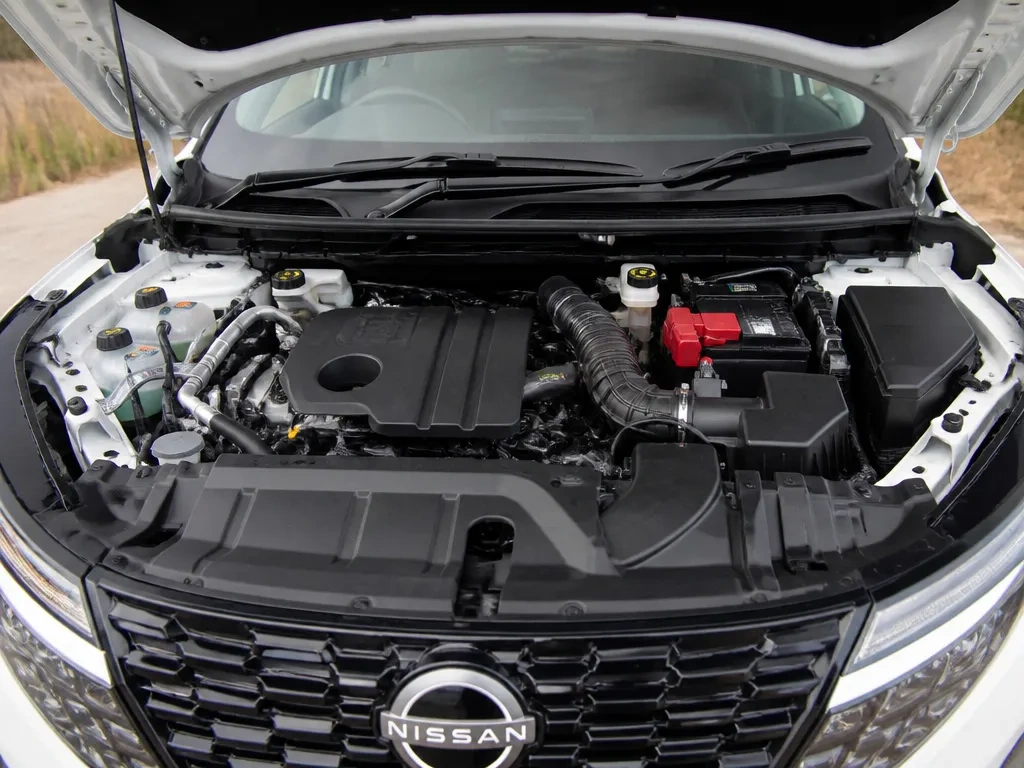
The commonly quoted capacity for the 2024 Nissan Qashqai KR15DDT 1.5L VC-Turbo e-POWER generator engine is 3.9 liters with a new oil filter, or about 4.1 US quarts. Treat that figure as provisional until it is checked against the market- and VIN-specific Nissan documentation.
This concerns generator-engine oil only. It does not describe fluid for the EV traction motor, battery, or high-voltage drive system. After draining the oil and replacing the filter, fill conservatively and set the final level using the vehicle’s specified dipstick or level-sensor procedure.
What Is The Exact Oil Capacity With Filter For Kr15ddt E-power?
The figure often associated with a normal drained oil change on the 2024 Nissan Qashqai KR15DDT 1.5L VC-Turbo e-POWER generator engine is 3.9 liters, or about 4.1 US quarts, with a new oil filter installed. That figure is not independently confirmed here, so check the service information for the vehicle’s market and VIN before treating it as exact.
| Capacity label | Amount | What the number includes | Unit conversions |
|---|---|---|---|
| With filter | Reference figure: 3.9 L | A normal drained oil change with a replacement filter, followed by final level adjustment | About 4.1 US qt, if the reference figure applies |
The capacity should be confirmed in the correct Nissan service information for the vehicle. The procedure may define the amount as a drained fill with a new filter, followed by checking and adjusting the level. The final reading can vary with the vehicle’s position, settling time, temperature, drain time, and the filter installed.
Market Or Specification Caveat (What Can Change)
The applicable capacity and checking procedure may depend on the market, production specification, service information revision, and the condition assumed by the procedure. If the Nissan documentation for the vehicle’s VIN gives a different figure or measurement method, follow that documentation rather than a general listing.

How Is The With-filter Capacity Calculated For This Engine?
A “with filter” capacity refers to the oil required for the specified drain-and-refill procedure when a replacement filter is installed. It is not necessarily the same as the amount that will be poured in during every service, because some oil can remain in the engine and filter circuit.
The practical point is simple: a with-filter capacity is a service reference, not a substitute for the final dipstick or level-sensor check.
Which Market, Trim, Or Condition Changes The Capacity And By How Much?
The amount physically added can differ from the published with-filter figure when the drain procedure, filter, vehicle position, or level-check conditions differ. The exact effect cannot be established here without the applicable Nissan documentation.
| Factor | What changes | How to handle it |
|---|---|---|
| Drain completeness | How much oil remains in the engine and filter circuit | Set the final level using the specified checking method |
| Filter compatibility | Filter fitment and retained oil volume | Confirm the filter part number for the vehicle |
| Vehicle position and temperature | How the oil settles before measurement | Repeat the check under the same conditions required by the procedure |
Do not chase an exact jug amount when the service conditions differ. Use the documented capacity as a reference, then adjust to the specified level.
How Should You Fill And Verify The Oil After Replacement?
After draining the oil and installing the correct filter, add oil in stages. The reference figure commonly quoted for this engine is 3.9 liters, or about 4.1 US quarts, but the final level check remains essential and the figure should be confirmed for the vehicle before use.
If the level remains low after a reasonable addition, do not keep filling blindly. Check for leaks, confirm that the filter is correct and seated properly, and verify that the measurement procedure is being followed. If the level is above the maximum mark, stop adding and correct the excess before driving.
What Should You Do If Your Measured Amount Doesn’t Match The Spec?
If the amount added does not produce the expected level, adjust the oil to the correct dipstick or level-sensor indication rather than assuming the container amount is wrong. The 3.9 L, or about 4.1 US qt, figure should be treated as an unverified reference until confirmed for the vehicle.
If the reading remains inconsistent, verify the vehicle’s measurement method and inspect for leaks. Do not use an unsupported jug number as the final authority.
What Edge Cases And Caveats Could Mislead The Obvious Value?
A quoted capacity can mislead when it is applied to a different service condition or vehicle specification. Treat the 3.9 liters figure as a reference requiring confirmation, then use the vehicle’s specified level-check method to set the final amount.
Dry-fill Vs Drained Differences And Their Impact
A routine drained oil change and a fully dry oil system are different conditions. The amount added can also differ when oil remains in the filter housing or internal passages. For that reason, the amount poured is not enough to establish the final level.
Drain time, oil temperature, vehicle position, and the filter installed may all affect the measured result. Follow the applicable procedure rather than trying to reproduce a number from a different service.
Vin-specific Or Market-specific Variations
The KR15DDT designation alone may not identify every service-document revision or market application. Confirm the engine, model-year specification, market, and VIN before relying on a capacity figure or level-check method.
Filter Type And Compatibility Considerations
Use the filter specified for the vehicle. A filter that appears to fit may still differ in fitment or construction, so its part number should be checked before installation.
What Are The Risks, Costs, And Warranty Implications Of Misfilling?
An incorrect oil level can create mechanical risk and may lead to additional service work. The specific consequences depend on how far the level is from the permitted range and how the vehicle is operated.
Mechanical Risk And Long-term Wear From Incorrect Quantity
Too little oil may reduce the oil available to lubricate and cool engine components. Too much oil may contribute to churning or aeration. If the level is outside the specified range, correct it rather than continuing to drive and assuming the issue will resolve itself.
The direct cost may be limited to a top-up or drain and refill, but a vehicle operated with an incorrect level may require further inspection if symptoms or warning indicators appear.
| Misfill condition | What changes | Recommended response | Possible cost outcome |
|---|---|---|---|
| Underfilled | Less oil is available in the engine | Stop and correct the level before continued use | Top-up or inspection, depending on the cause |
| Overfilled | The oil level is above the specified range | Remove excess oil before driving | Drain and refill or additional service work |
| Repeated mismatch | The service result does not agree with the level check | Verify the filter, leaks, procedure, and documentation | Diagnostic or corrective service costs |
Keep the final level within the vehicle’s specified range and retain service records. If the level was substantially wrong or the vehicle was driven with a warning or abnormal engine noise, arrange an inspection.
Warranty And Service Cost Considerations, Extra Oil Usage Costs And Drain/refill Implications
Warranty decisions depend on the vehicle, the failure, the maintenance records, and the applicable warranty terms. Keep the invoice, oil specification, filter information, quantity supplied, and final level check.
An overfill may require a drain and refill. An underfill may require a top-up and an inspection for leaks or installation errors. Ask the workshop to document the correction if the service result was disputed.
Where Can I Confirm The Exact Figure From Official Sources?
Confirm the exact with-filter capacity in the Nissan service documentation for the vehicle’s market and VIN. Make sure the information concerns the KR15DDT e-POWER generator engine and not the EV traction system.
| Official source to use | What to look for | What to confirm in the wording |
|---|---|---|
| Nissan workshop/service manual for KR15DDT | Engine lubrication and oil-change procedure | Capacity with filter and the required level-check method |
| Nissan parts catalog for the vehicle | Applicable oil-filter part number | That the filter matches the vehicle and engine application |
| Nissan owner’s manual | Oil-level checking instructions | The correct dipstick or level-sensor procedure |
Use the workshop information for the capacity and the owner’s manual for the vehicle-specific checking procedure. If those documents do not support the 3.9 L reference figure, do not use it as an exact fill instruction.
How To Locate The Correct Market And Year Documentation
Start with the vehicle’s VIN and sales market. Use the Nissan documentation that identifies the relevant model-year specification and KR15DDT engine. A document for a nearby market may not use the same procedure or capacity wording.
How To Cross-check Your Manual Against Your Vehicle Vin
Confirm that the document identifies the same engine, market, and vehicle specification. Check that the procedure covers oil and filter replacement, states whether the capacity is with or without the filter, and explains how the final oil level must be measured. If any of those details differ, use the VIN-matched information instead of the reference figure.
Quick Summary
The commonly quoted reference for a normal oil drain and filter replacement on the 2024 Nissan Qashqai KR15DDT 1.5L VC-Turbo e-POWER generator engine is 3.9 liters, or about 4.1 US quarts, with the filter. Confirm that figure in the vehicle’s market- and VIN-specific Nissan documentation before filling.
This concerns the engine that generates electricity in the e-POWER system. It is not a fluid quantity for the traction battery, electric motor, or high-voltage drive system.
Install the correct filter, add oil conservatively, let it settle as required, and bring the level to the Nissan-specified target. If the VIN-specific documentation gives a different capacity, follow that information.
Frequently Asked Questions
How Much Should An Oil And Filter Change Cost?
There is no single price that applies everywhere. The total depends on local labor rates, the oil specification, the filter, and whether the work is carried out by a Nissan dealer or an independent workshop. Request an itemized quote.
How Can I Tell Whether The Published Capacity Applies To My Qashqai?
Match the vehicle identification number, engine code, model-year specification, and sales market against the maintenance documentation. A listing that only says “Qashqai 1.5” does not establish that it applies to the KR15DDT e-POWER generator engine.
Can I Use The Car Immediately After The Oil Service?
Use the vehicle only after the final level check is satisfactory and the filter and drain-plug areas have been inspected for leaks. If a warning remains illuminated, the engine sounds abnormal, or the level cannot be established, leave the vehicle parked and arrange an inspection.
When Should A Professional Check The Vehicle?
Get professional help if the filter will not seat, the drain plug or sealing washer is damaged, oil leaks after the service, or the level-check procedure is unclear. Professional inspection is also appropriate when the filter or oil product cannot be verified.
What Should I Keep As Proof That The Correct Service Was Done?
Keep the invoice or service record showing the vehicle identification number, date, mileage, oil specification, quantity supplied, filter part number, and final level check. Keep the filter packaging where possible.
What Should I Do If A Workshop Insists Its Number Is Correct But The Vehicle-level Reading Disagrees?
Ask the workshop to repeat the level measurement using the vehicle’s specified procedure on level ground, then compare it with the market- and VIN-matched documentation. Do not approve more filling based only on the amount poured into the engine.