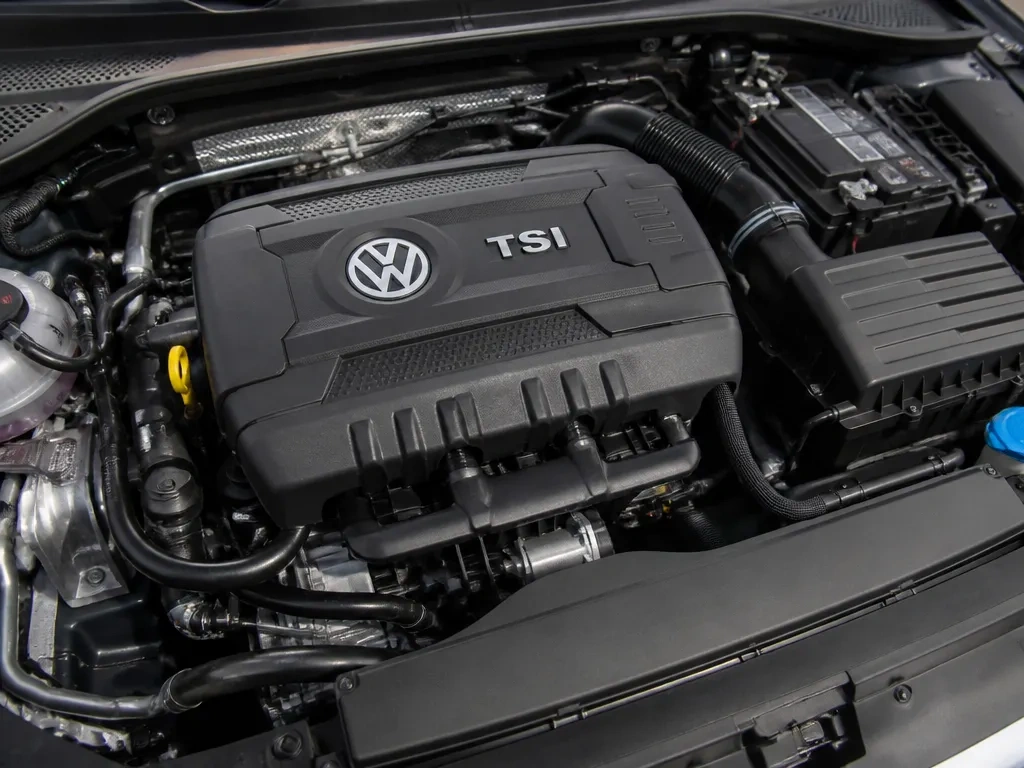
The 2024 Volkswagen Golf 2.0L TSI (Golf GTI) has a 2.0L engine with 4 cylinders in an I4 configuration. Those figures describe its displacement and cylinder layout; they do not, by themselves, specify output, fuel use, or service requirements.
| Engine fact | Value |
|---|---|
| Displacement | 2.0L |
| Cylinder count | 4 |
| Configuration | I4 |
What does 2.0L engine size mean?
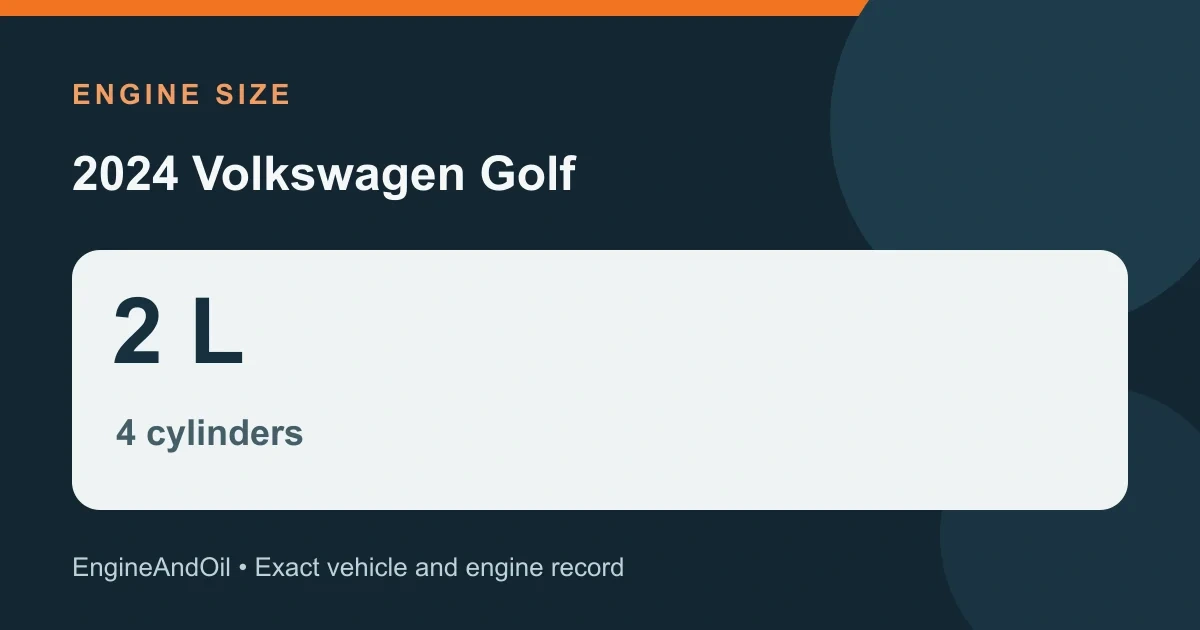
Displacement is a measure of the combined volume swept by the engine’s pistons as they travel through their cylinders. The 2.0L figure is the stated engine-size value for this Golf GTI. It is useful when identifying the engine, but it is not a direct measure of how powerful or economical a vehicle will be.
Two engines with the same displacement can have different designs and operating characteristics. Likewise, a displacement figure alone does not establish a vehicle’s horsepower, torque, fuel consumption, or acceleration. Those specifications require their own confirmed figures and can depend on the exact vehicle version and market. For an engine-size lookup, the dependable starting point is the stated displacement and cylinder arrangement, rather than assumptions based on the model name.

What does I4 mean?
I4 describes an inline engine with 4 cylinders. “Inline” means the cylinders are arranged in a single row. In this case, I4 and 4 cylinders express the same basic cylinder layout in two different ways: one is a configuration label, and the other is a count.
The layout is a separate fact from displacement. The 2.0L value describes engine size, while I4 describes the arrangement and number of cylinders. Taken together, the details identify the engine as a 2.0L, 4-cylinder inline unit. They do not provide a complete mechanical specification, so they should not be used to infer other equipment or performance figures.
Quick facts for the 2024 Golf GTI
For a concise reference, the engine-size details are:
- Displacement: 2.0L
- Cylinders: 4
- Configuration: I4, or inline-4
These are the key facts to use when a form, listing, or comparison asks for engine size and cylinder configuration. If a listing asks for a different item, such as engine code or fuel economy, do not substitute one of these three facts. Check the documentation for the particular vehicle and the specific field requested.
How to use engine size when comparing vehicles
Start by comparing like with like: check the model year, vehicle identity, and the wording used for each specification. A displacement entry answers how large the engine is as stated; a cylinder entry answers how many cylinders it has; and a configuration entry describes their arrangement. Keeping those categories distinct helps prevent a common comparison error: treating one number as if it answered every engine-related question.
For this Golf GTI, record 2.0L for displacement and 4 for the cylinder count. Use I4 when the field asks for configuration. If an online listing uses a different label or leaves a field blank, avoid filling the gap with an assumed code, measurement, or performance claim. When precision matters, confirm that the information refers to the same year and vehicle version rather than a different Golf or a vehicle from another market.
Engine size can be a useful filter while shopping, but it is only one part of a vehicle comparison. Buyers may also need details about equipment, operating costs, or maintenance. Those should be checked separately using information specific to the vehicle. The displacement and layout given here do not establish oil requirements, service intervals, or other maintenance instructions.
What this information does not tell you
The engine-size figures identify displacement and cylinder layout, not the full specification. They do not state horsepower, torque, fuel economy, oil capacity, or oil grade. Nor do they identify a particular engine code. Avoid relying on an assumed value for any of those items when choosing parts, planning maintenance, or comparing advertised performance.
If you need one of those additional details, look for the exact item in documentation that applies to the individual vehicle. Match the vehicle identity and relevant version before acting on it. This is especially important when a broad model name covers multiple configurations. A correct engine-size entry can still be insufficient for a parts order or service decision if that decision depends on a separate specification.
Summary
The 2024 Volkswagen Golf 2.0L TSI (Golf GTI) is listed with a 2.0L engine, 4 cylinders, and an I4 configuration. Use those values for engine size and cylinder-layout questions. Treat performance, economy, maintenance, and engine-code questions as separate specifications rather than drawing conclusions from displacement alone.
For more engine-size explainers, browse Engine Size articles or visit the Engine Size guide.