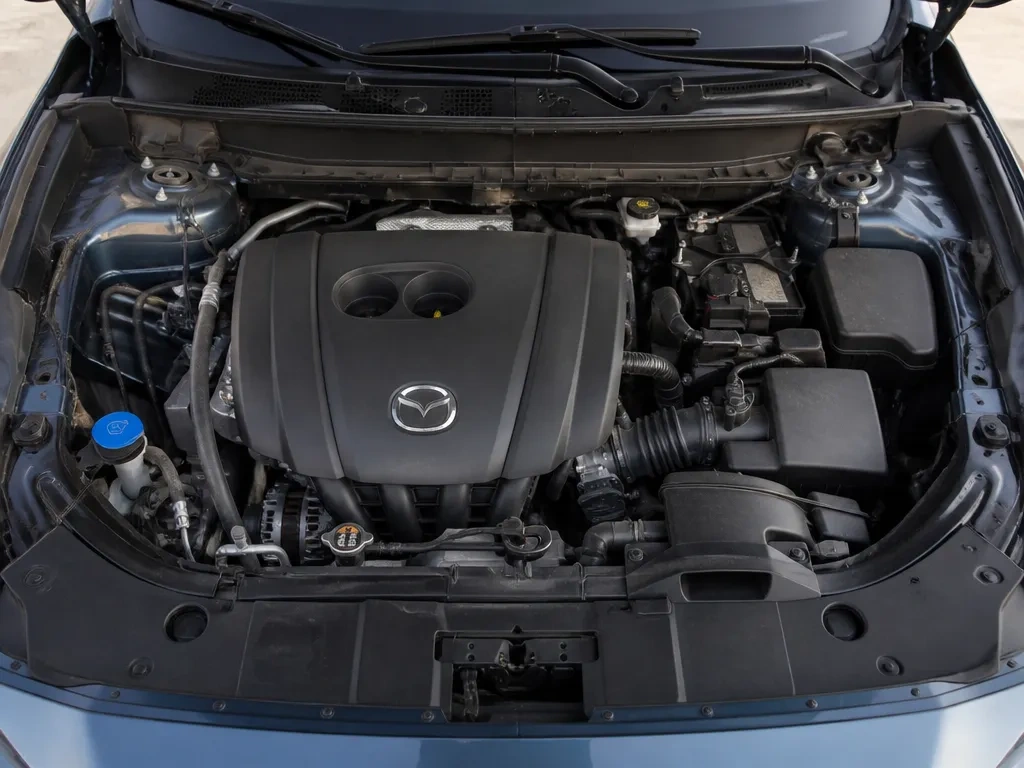
The 2017 Mazda CX-5 2.5 L engine has a displacement of 2.5 litres and 4 cylinders, arranged as an I4. Use those details as the basic engine description; check the vehicle’s identification and part fitment before ordering components that depend on the exact application.
| Engine detail | Value |
|---|---|
| Displacement | 2.5 L |
| Cylinder count | 4 |
| Configuration | I4 |
What does 2.5 L and I4 mean?
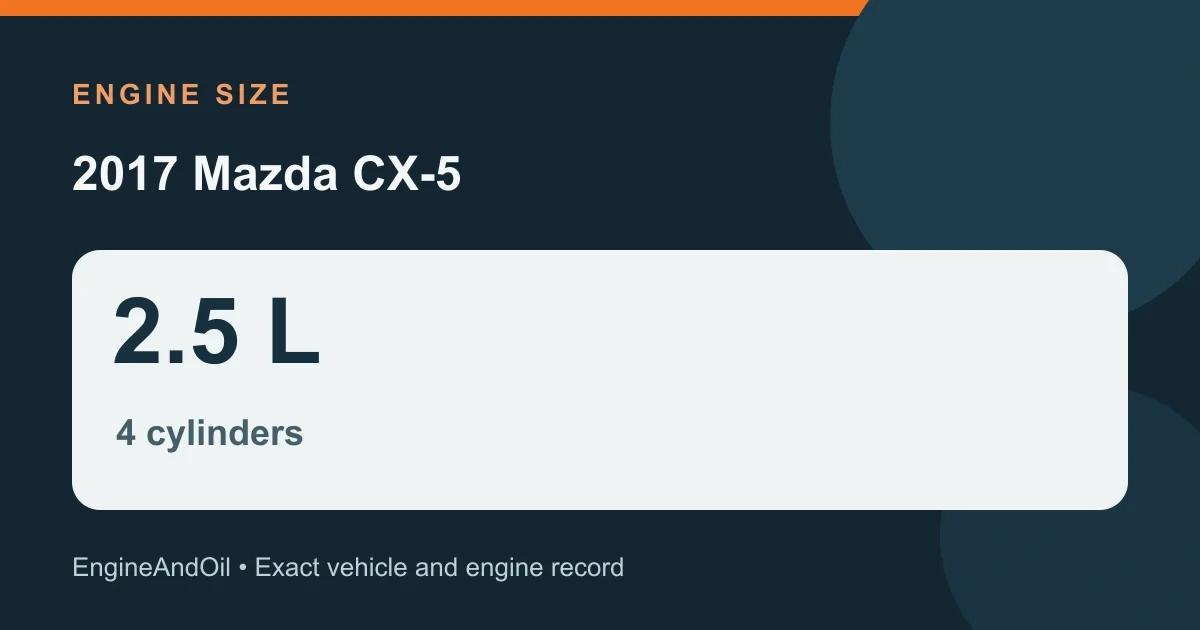
The displacement identifies the engine by its approximate swept volume, expressed here in litres. The cylinder count tells you that the engine has 4 cylinders. I4 describes an inline arrangement: the cylinders are arranged in a single row. Together, these terms provide a concise description of the engine without identifying every feature or component fitted to a particular vehicle.
For a quick reference, the supported description is 2.5 L, 4-cylinder, I4. Keep those fields together when comparing a vehicle description with a parts listing. A listing that mentions only a model name or displacement may not establish that a particular component fits. Check the full application information rather than treating one matching detail as proof of compatibility.

Using the specification when shopping for parts
Start with the vehicle identification information and the part’s stated application. Compare the model year, model, engine description, and any fitment details requested by the seller or catalog. If the listing cannot be matched clearly to the vehicle, ask for a fitment check before placing the order. For engine-related parts, a match on displacement alone may not resolve every application difference.
Keep a copy of the listing and the information used to confirm fitment. If a seller provides a vehicle-specific part number, compare it with the number shown in the relevant catalog or service information for the car. If the details conflict or remain unclear, pause and ask the seller or a qualified parts professional to resolve the mismatch before buying.
This is especially useful when the component is designed around a particular engine application. A part can look similar to another item yet have different connections or fitment requirements. Do not assume that appearance or a broad description is enough to establish compatibility. The 2.5 L I4 description is a useful starting point, not a substitute for checking the part’s listed application.
What the basic engine description does not tell you
Displacement and cylinder arrangement do not, by themselves, specify every engine feature. They do not identify an engine code, induction system, valve arrangement, or a particular part number. Do not infer those details from the 2.5 L label. If a repair or replacement depends on information beyond displacement and cylinder count, consult the vehicle’s identification records and the fitment details for the component.
The same caution applies to maintenance choices. The engine-size description alone does not establish a fluid specification, service quantity, or maintenance interval. Use the instructions that apply to the vehicle and the service being performed; do not choose a product or procedure simply because it is associated with a generic 2.5 L engine description.
How to check a parts listing
Read the listing carefully and note which vehicle details it asks you to provide. Enter the vehicle information accurately, then review any exceptions or application notes that appear. If a catalog offers a vehicle-specific lookup, use it and confirm that the result corresponds to the vehicle rather than a similar model or a broad search result.
When the listing is incomplete, contact the seller with the vehicle details and ask which application the part is intended for. Ask for a clear answer about fitment, not just confirmation that the part is associated with a CX-5 or a 2.5 L engine. If the answer cannot be reconciled with the vehicle records, do not rely on the listing alone.
When descriptions do not agree
Different listings may use abbreviated or inconsistent wording. One may say “2.5 L,” while another may identify the cylinder arrangement or use a more detailed application description. Compare the actual vehicle information with the complete fitment notes, and avoid treating a vague description as a confirmed match.
If a label, catalog result, or seller response appears inconsistent, stop before ordering or beginning work. Check the vehicle identification information and ask for a vehicle-specific resolution. Where a repair depends on an exact engine application, getting that question answered beforehand can help avoid an unsuitable part, a delayed repair, or unnecessary reordering.
Quick summary
The basic engine specification is 2.5 L, 4 cylinders, I4. The displacement and cylinder arrangement describe the engine at a high level; they do not supply an engine code or establish every component’s fitment. Use the vehicle details and the seller’s application information to confirm parts before purchase. For more general reading, visit the Engine Size articles or the Engine Size guide.